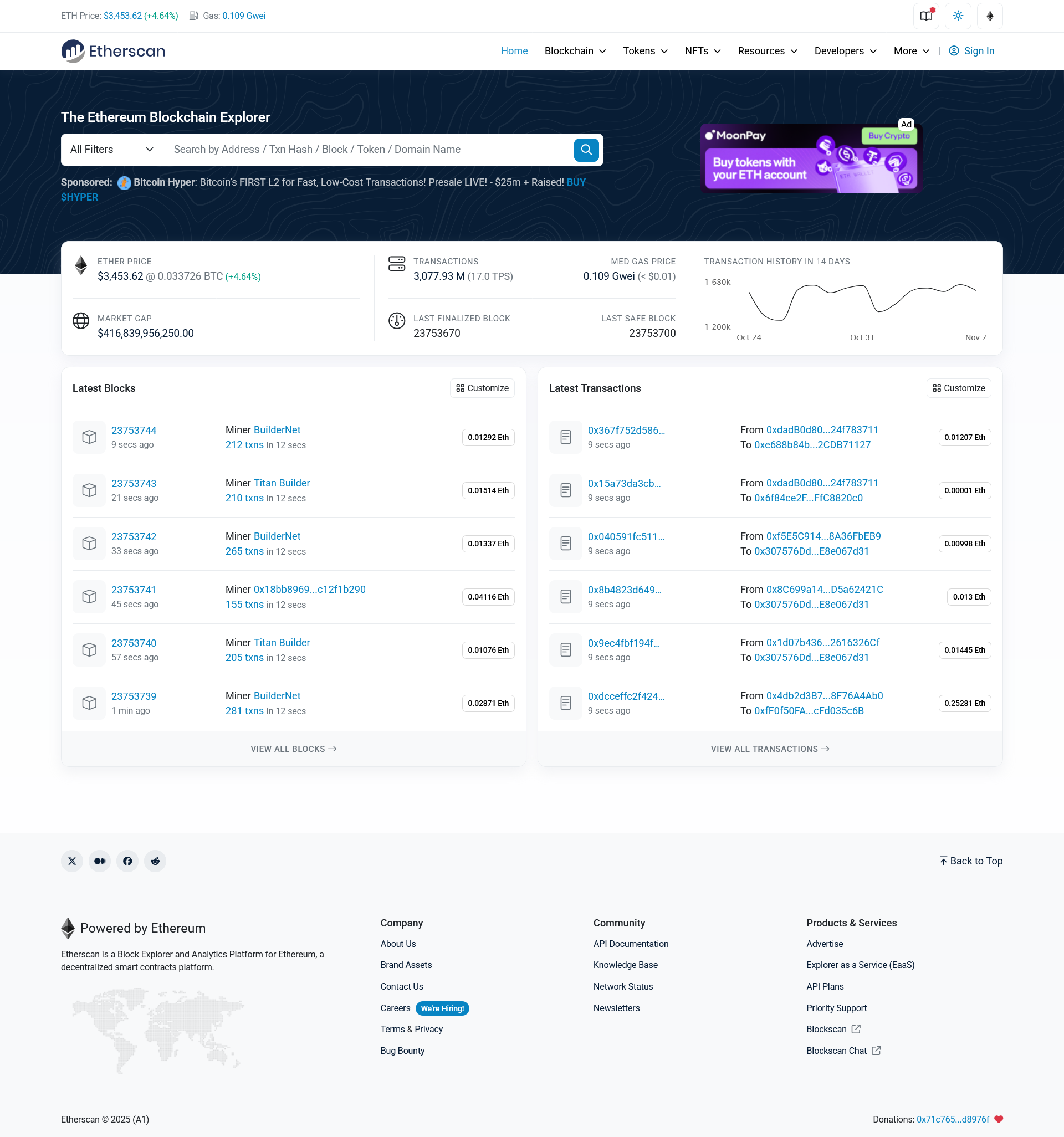
Etherscan: A Window Into the Ethereum Blockchain :-
Etherscan is one of the most widely used tools in the Ethereum ecosystem. At its core, it is a blockchain explorer—a platform that allows anyone to view, track, and analyze activity on the Ethereum network in real time. While Ethereum itself is decentralized and transparent by design, Etherscan makes that transparency accessible and understandable to everyday users.
What Is Etherscan ?
Etherscan is a block explorer and analytics platform for Ethereum. It does not store tokens, manage wallets, or execute transactions. Instead, it reads data directly from the Ethereum blockchain and presents it in a human-readable format.
With Etherscan, users can look up:
. Transactions
. Wallet addresses
. Smart contracts
. Token transfers (ERC-20, ERC-721, ERC-1155)
. Blocks and gas fees
. Network statistics
In simple terms, if Ethereum is a public ledger, Etherscan is the search engine that helps you read it.
Key Features of Etherscan ;
1. Transaction Tracking :-
Every Ethereum transaction generates a transaction hash (TxHash). By pasting this hash into Etherscan, users can see:
. Transaction status (pending, successful, or failed)
. Amount transferred
. Gas fees paid
. Sender and receiver addresses
. Block confirmation details
This is especially useful when confirming whether a transfer went through or diagnosing failed transactions.
2. Address Lookup ;
Entering a wallet address on Etherscan reveals:
. ETH balance
. Token holdings
. Complete transaction history
. Interactions with smart contracts
This transparency is a fundamental feature of public blockchains and helps users audit activity without needing permission.
3. Smart Contract Verification ;
Etherscan allows developers to verify smart contract source code, enabling anyone to:
. Read the contract logic
. Confirm that deployed code matches the published source
. Interact with contracts directly through the interface
This feature is crucial for trust and security in decentralized applications (dApps).
4. Token and NFT Exploration ;
Etherscan provides detailed pages for tokens and NFTs, including:
. Total supply
. Number of holders
. Transfer history
. Contract address
For NFTs, users can track minting activity, ownership transfers, and contract metadata.
5. Gas Tracker and Network Analytics ;
The platform includes tools to monitor:
. Current gas prices
. Average transaction fees
. Network congestion
. Block times
These insights help users choose optimal times to send transactions and avoid overpaying for gas.
Who Uses Etherscan?
Etherscan is used by a wide range of participants in the Ethereum ecosystem:
. Everyday users checking transaction statuses
. Traders verifying token transfers
. Developers debugging smart contracts
. Researchers and analysts studying on-chain data
. Security professionals investigating suspicious activity
Despite its technical depth, Etherscan remains approachable even for beginners.
What Etherscan Is Not
. It’s important to understand what Etherscan does not do:
. It is not a wallet
. It cannot reverse or cancel transactions
. It does not control Ethereum or user funds
Etherscan is purely an informational and analytical tool.
Why Etherscan Matters :-
Etherscan plays a vital role in maintaining transparency, accountability, and trust within the Ethereum network. By making blockchain data openly accessible, it empowers users to verify information independently rather than relying on intermediaries.
In a decentralized world, tools like Etherscan are essential—they turn raw blockchain data into knowledge.
Conclusion ;-
Etherscan is more than just a blockchain explorer; it is the backbone of Ethereum transparency. Whether you are a beginner checking your first ETH transfer or a developer auditing smart contracts, Etherscan provides the visibility needed to navigate the Ethereum ecosystem with confidence.